
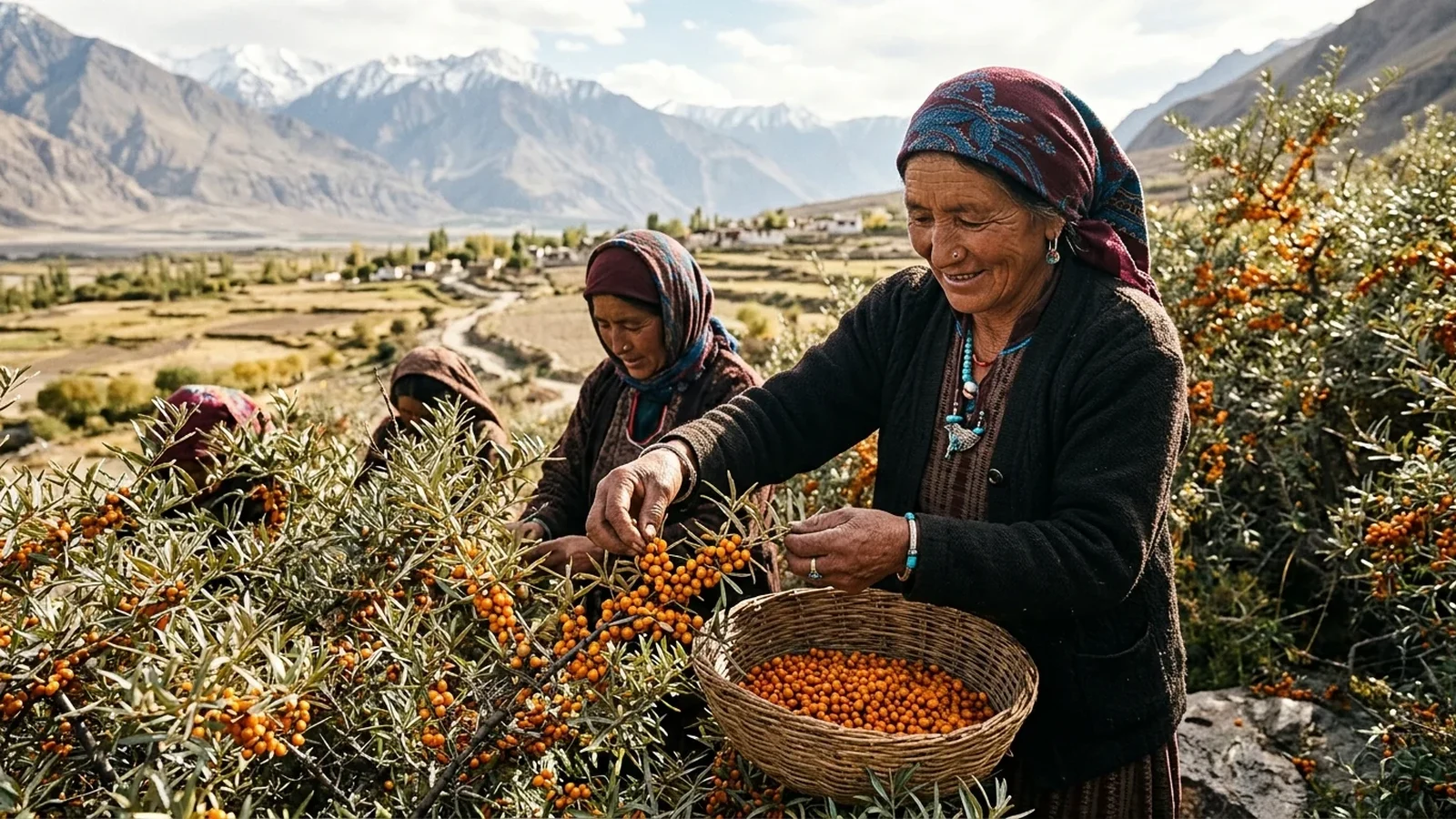
Every bottle of Amberbio begins in a village that most maps will not show you. Small settlements along the Indus and Nubra valleys, where a handful of families have been tending sea buckthorn groves for many generations. This is a quiet look at their work.
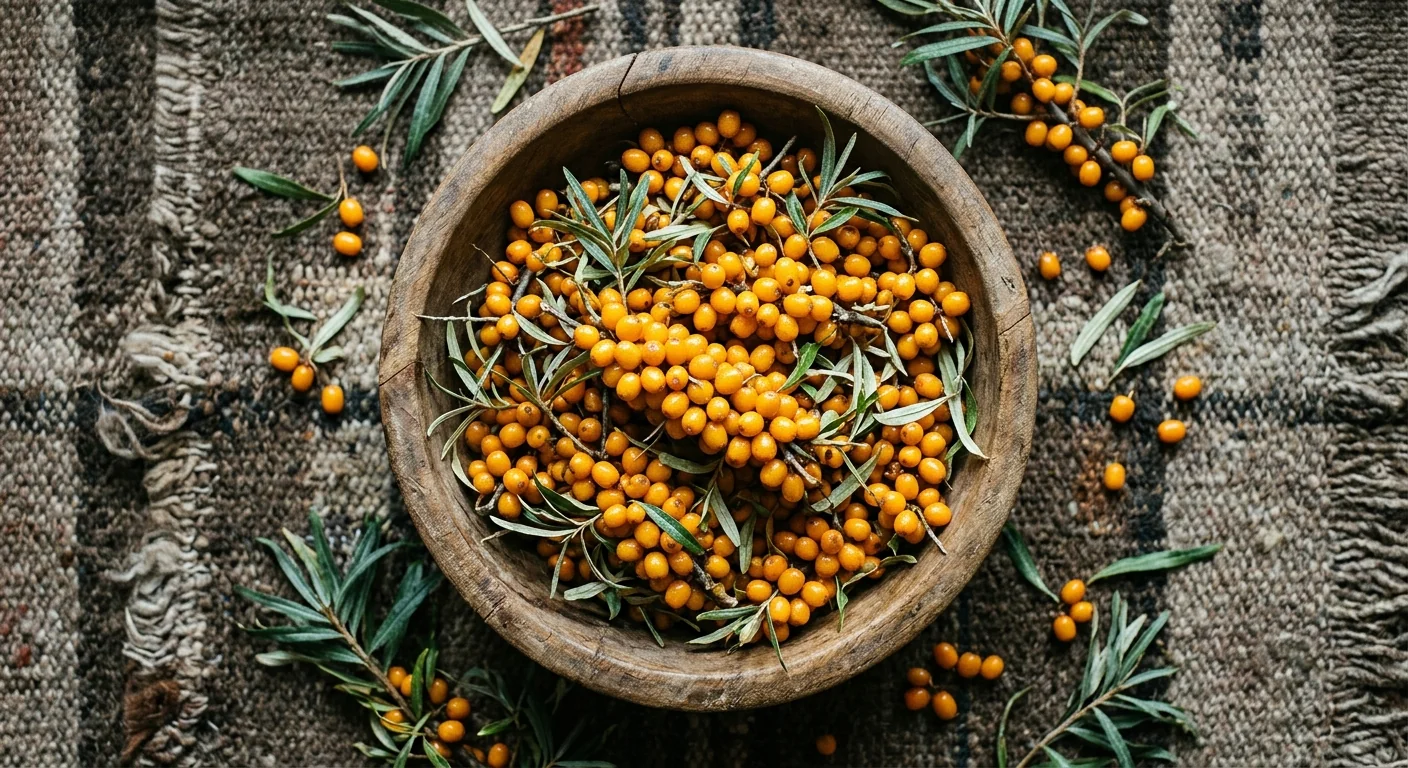
The harvest arrives in late August. Whole families walk out together, before the sun rises fully over the ridge. The berries are impossibly bright against the grey scree — small orange lanterns among sharp thorns. Getting to them takes patience and a steady hand. Nothing about this work is fast.
The hands that pick
Sea buckthorn berries do not release from their branches easily. Ladakhi harvesters have refined a technique over generations — a cloth sheet spread beneath the bush, a gentle tapping with wooden sticks, a slow, respectful rhythm that dislodges the ripe berries without damaging the branch. The unripe ones stay, to be picked in another two weeks.
Why we pay by the hour, not by the kilo
In most Indian agricultural supply chains, harvesters are paid per kilogram of yield. It sounds fair. In practice, it pushes people to work faster, take shortcuts, damage the plant. So we do it differently. Our growers are paid a transparent hourly wage — the same for a strong harvest day or a lean one — and this simple change lets the picking stay careful.
In 2025, our hourly rate to Ladakhi harvesters was 40% above the local agricultural benchmark. In 2026 we're raising it again.
Winter, when the mountains rest
Between October and April, the groves rest beneath deep snow. Our partner families move on to weaving, apricot drying, small dairy work — the many quiet skills of a Himalayan life. In February, when the days lengthen a little, we begin the conversation about the next harvest. There is no hurry. There has never needed to be.
When you hold an Amberbio bottle, this is the chain you are holding — a slow, patient one, with a small community at the top and you at the other end. That is the whole story.