
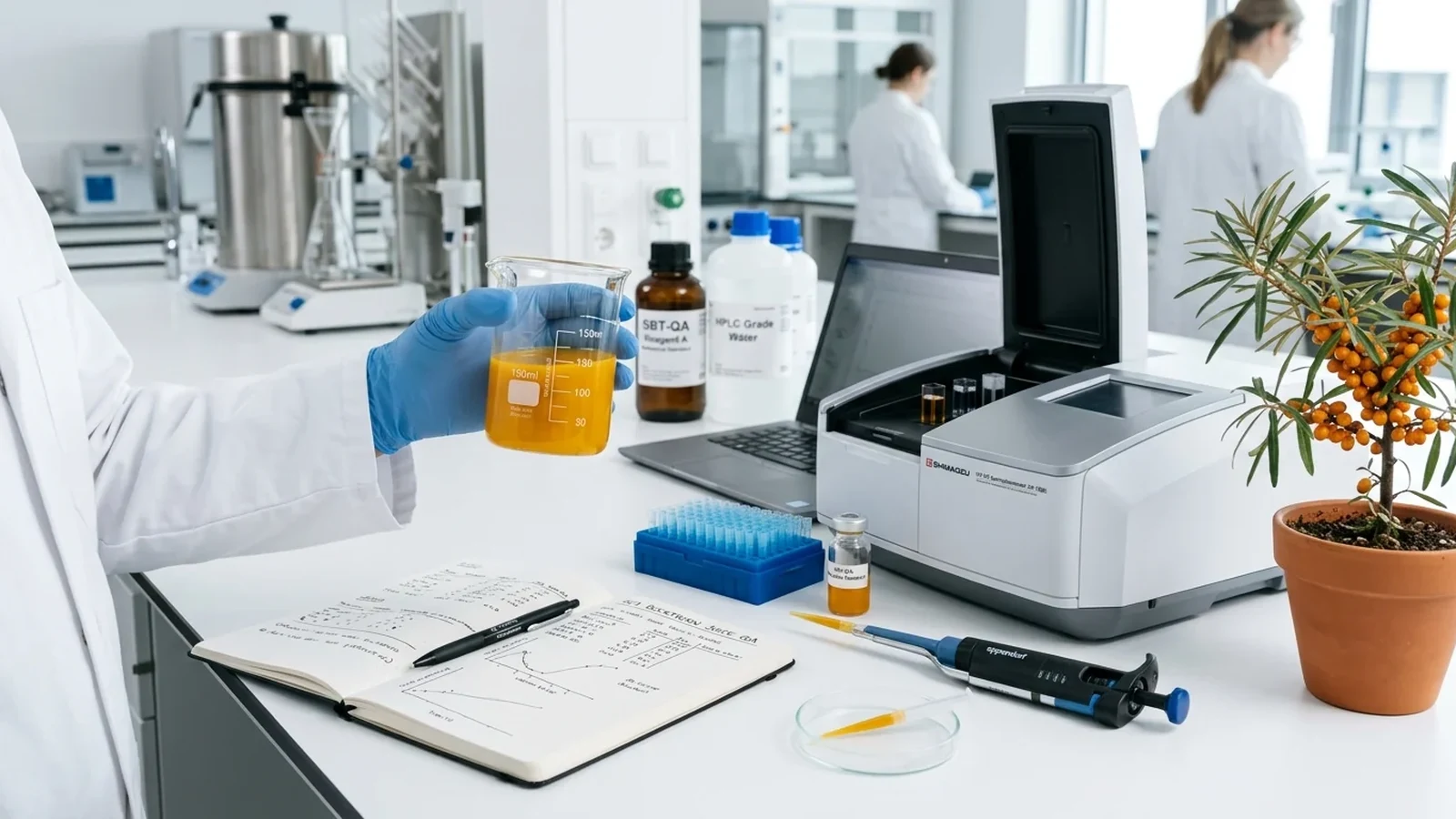
Sea buckthorn appears in scientific literature with unusual frequency for a wild plant. Its natural composition is distinctive enough that researchers have profiled it extensively — for its vitamin C content, its omega fatty-acid spread, and the wider bioactive family the berry carries. This article summarises the profile as it appears in published research. It is educational context, not a health claim.
The nutrient profile
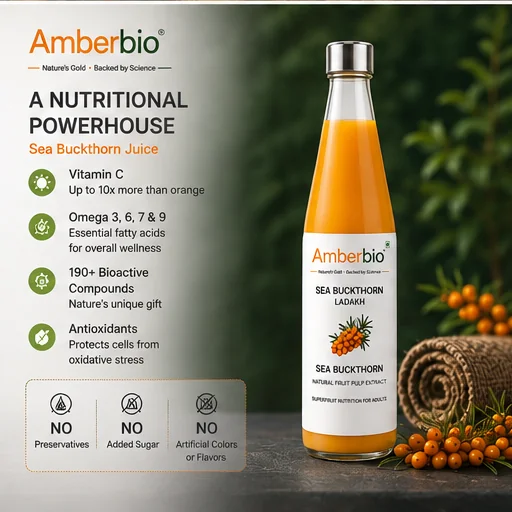
Sea buckthorn is one of the few plants where all four common omega fatty acids — 3, 6, 7 and 9 — are naturally present. The berry pulp is also a natural source of vitamin C (often reported at multiples of an orange), vitamin E, and β-carotene (a vitamin A precursor). This is a nutritional profile — a description of what the fruit naturally carries, not a claim about health outcomes.
Published research has identified a wide range of bioactive compounds in sea buckthorn — including flavonoids, tocopherols, tocotrienols, phytosterols and organic acids. This describes the fruit's composition, not a therapeutic effect.
What the studies describe
Peer-reviewed research from institutes in Finland, China, India and elsewhere has profiled sea buckthorn extensively. Omega-7 (palmitoleic acid) is one of the fatty acids abundant in the berry pulp — a nutrient often discussed in nutrition literature in the context of mucous-membrane support. This is a general nutrition observation, not a treatment claim.
The Omega-3 and Omega-6 concentrated in the seed oil are essential fatty acids the human body needs from food. Their role in nutrition is well-established across food-science literature. Sea buckthorn seed oil is one natural source of both.
Traditional context
Sea buckthorn has been used as a food across the Himalayas, Central Asia and Tibet for centuries. Traditional systems have their own vocabulary for the fruit's role in daily life. We share this as a matter of heritage — not as a modern medical claim.
How we handle the fruit
Because many of the compounds in sea buckthorn are heat-sensitive, how the fruit is processed matters. Our juice is gently cold-pressed and lightly pasteurised. Our berry and seed oils are extracted using supercritical CO₂ — a solvent-free method that helps preserve the oil's naturally occurring compounds.
The result is a bottle that reads exactly as nature wrote it — a whole-fruit, fully traceable, high-altitude pulp stabilised only by an FSSAI-approved preservative (INS 202, potassium sorbate) at safe levels.