
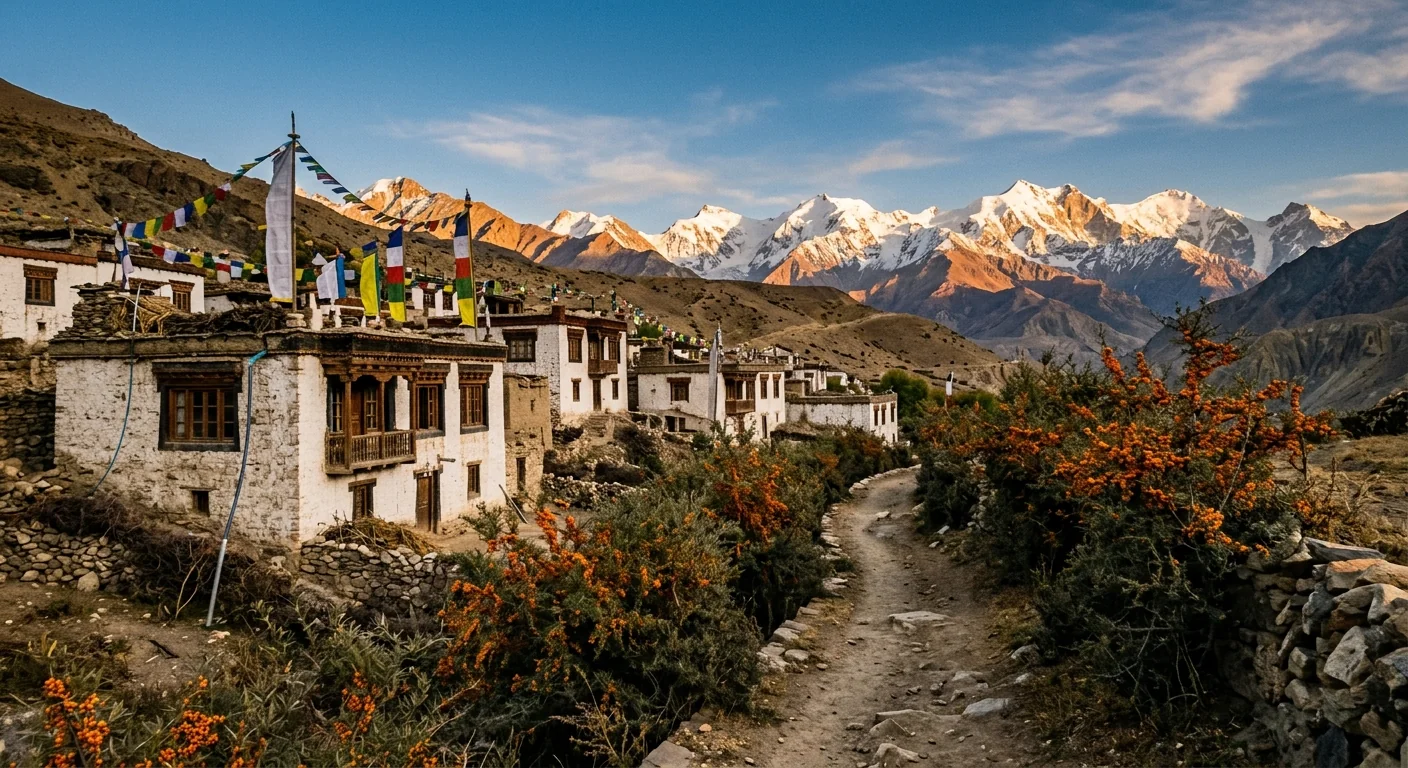
Sourced in Ladakh · Single origin sea buckthorn
From the cold Himalayas,
to your home.
A berry with a long recorded heritage, brought thoughtfully into your kitchen. The story of Amberbio starts high in the mountains — where organic sea buckthorn India has grown wild for generations. This is where our care begins.
The fruit
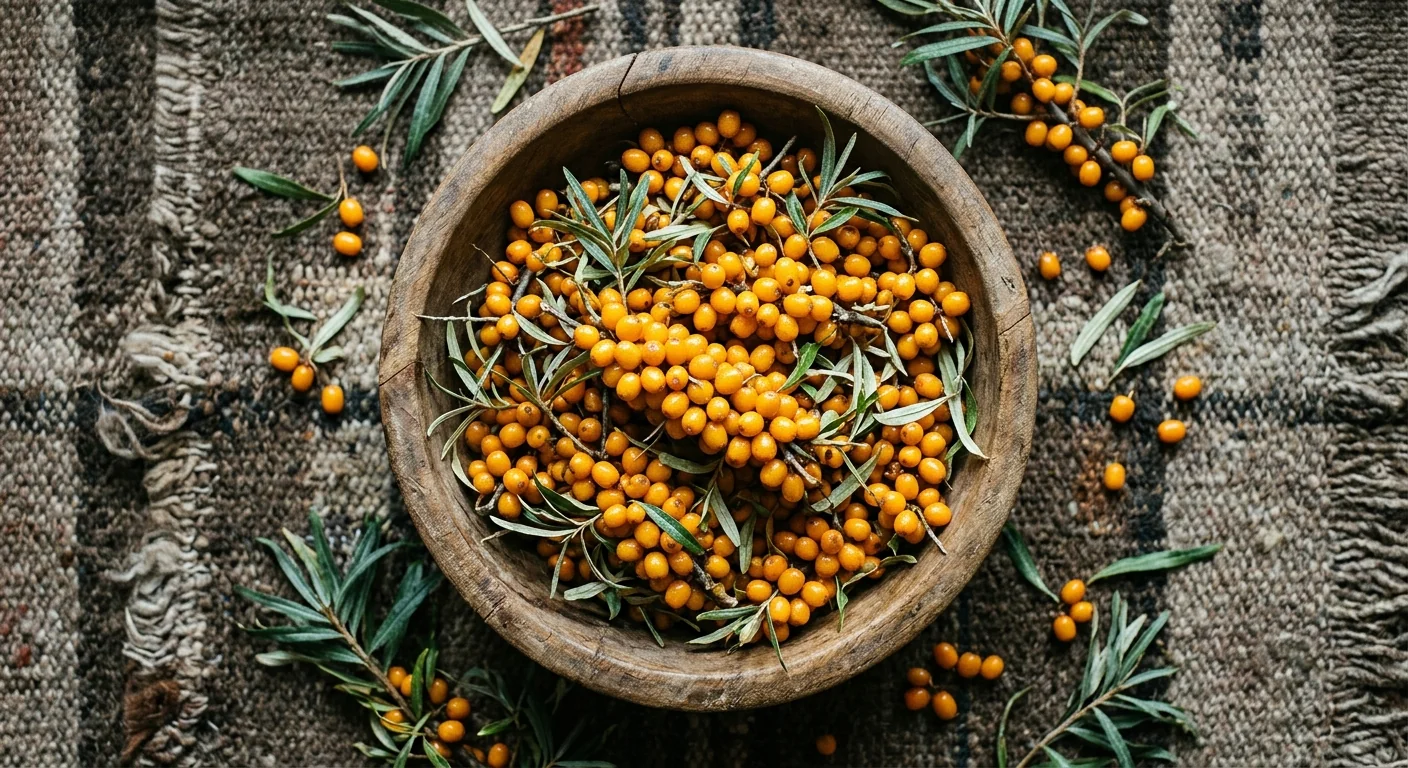
Why sea buckthorn. Why Ladakh.
Sea buckthorn is a hardy, deciduous shrub that thrives above 11,500 feet, where bright sunlight, thin air and cold nights concentrate its natural richness. Ladakh — with its clean environment and generations of botanical knowledge — is one of the few places in the world where sea buckthorn grows wild and unspoilt.
The fruit's naturally golden colour reflects a genuinely rare nutritional profile: Vitamin C, Omega 3, 6, 7 and 9, and over 190 naturally occurring bioactive compounds. Nothing about it is ordinary — and nothing about how we source it is either.
A berry documented in historical accounts
A heritage recorded in old texts.
Long before the word "superfood" existed, sea buckthorn already appears in historical writing. According to historical accounts, Genghis Khan's warriors are said to have carried a bright orange berry juice on their 13th-century campaigns — a tonic for stamina and recovery. Handlers reportedly fed the leaves to warhorses for strength and shining coats, and made a paste of berries to care for wounds.
The Mongol nobility are said to have drunk sea buckthorn wine — a use later documented in the 14th-century Chinese dietary treatise Yinshan Zhengyao (Proper and Essential Things for the Emperor's Food and Drink, c.1330).
A berry celebrated in old texts — now grown wild in Ladakh.
Sources: Hu Sihui, Yinshan Zhengyao (c.1330) · Buell & Anderson (2010), A Soup for the Qan, Brill · Suryakumar & Gupta (2011), J. Ethnopharmacology 138(2):268–278 · Full register on /nutrition-sources.
On national broadcast
A mention that meant the world.
PM Modi sea buckthorn — the SKUAST-Jammu convocation, 19 May 2018. A brief moment on national television where India's Prime Minister spoke about the very berry we bottle. A quiet nod to Ladakh, its growers, and to Jaguar Space's 'World Seeds' payload — carrying seeds from India, contributed by Protoplanet (Bengaluru), aboard NASA's Crew-11 mission to the ISS in August 2025.
Watch on YouTube
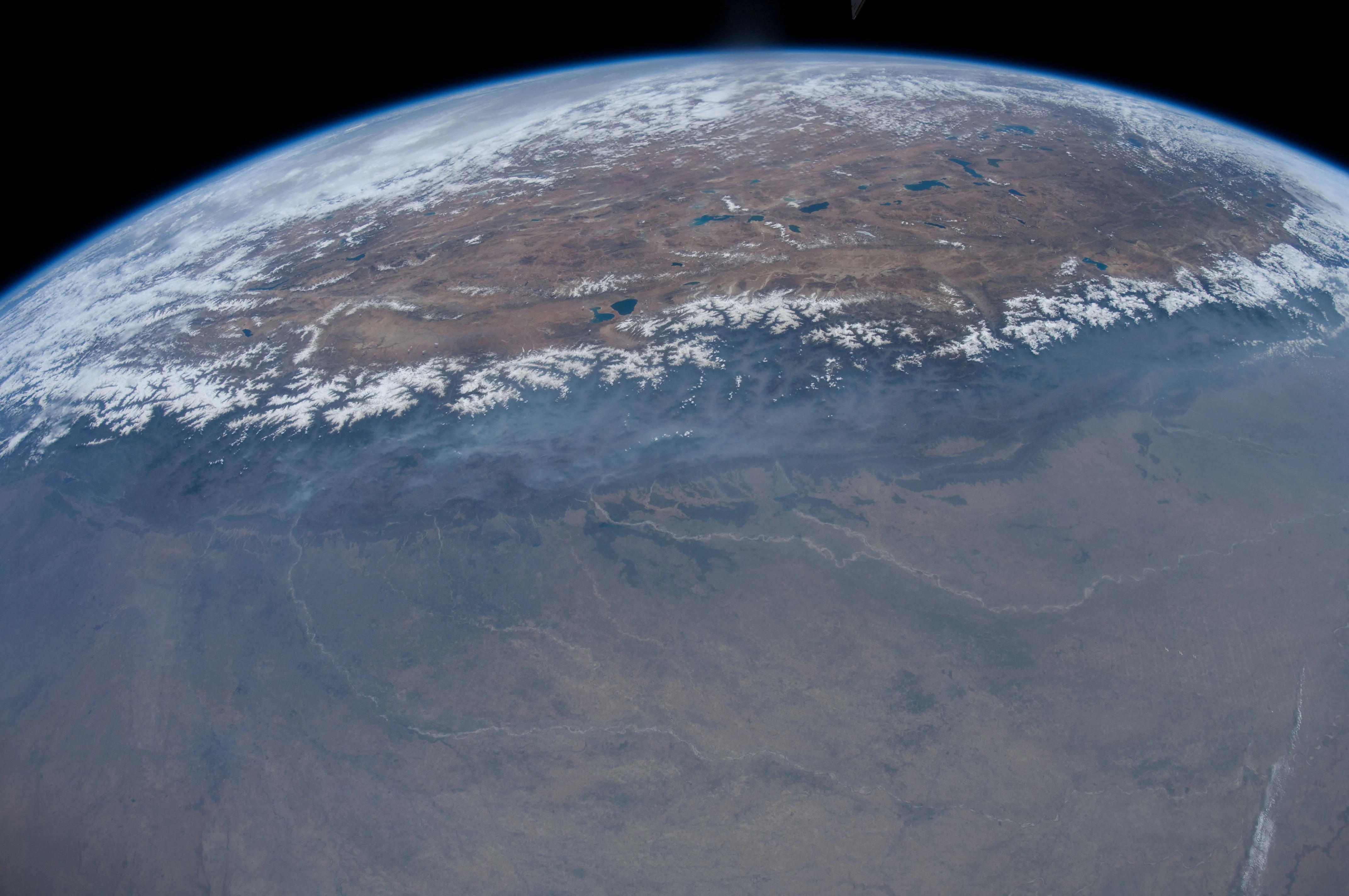
Photograph: NASA · ISS Expedition 31 · Himalayas and the Tibetan Plateau seen from the International Space Station
Ancient plant · Space-age research
Sea buckthorn seeds from India, aboard the International Space Station.
Sea buckthorn seeds from India were included in Jaguar Space's "World Seeds" payload, flown to the International Space Station aboard NASA's Crew-11 mission — launched from Kennedy Space Center on 1 August 2025 and docked at the ISS the next day.
The Indian contribution — sea buckthorn (Hippophae rhamnoides) and Himalayan tartary buckwheat, sourced from Ladakh — was made by Protoplanet, a Bengaluru-based space start-up. The World Seeds study included seeds from 11 nations across 5 continents — India, the Maldives, Argentina, Brazil, Costa Rica, Guatemala, Nigeria, Kenya, Armenia, Egypt and Pakistan — and investigates how seeds respond to the stresses of space, including gene activation and metabolic pathways essential for germination.
The seeds are being returned to Earth for study by Indian and international researchers, with an eye on food sources for long-duration space missions. A plant that already survives –43 °C winters and +40 °C summers on Earth was, briefly, taken beyond it.
Selected for space nutrition research. Grown in Ladakh.
Sources & verification
- NASA · Space Station Research Explorer · World Seeds (Investigation #9436) — official government record
- NASA · NASA's SpaceX Crew-11 Launches to International Space Station · 01 August 2025
- Jaguar Space · World Seeds · official mission page
- Protoplanet, Bengaluru · Seed Experiment 2025 · contributing partner (Director: Siddharth Pandey) — seeds sourced from Ladakh
- Jaguar Space · Press Releases archive (World Seeds / Crew-11 launch)
- The Hindu · Seeds of seabuckthorn, Himalayan buckwheat part of experiment on ISS · 03 August 2025
- The Economic Times · Seeds of seabuckthorn, Himalayan buckwheat part of experiment on ISS · August 2025
Amberbio is not affiliated with, endorsed by, or sponsored by NASA, Jaguar Space or Protoplanet. The seeds referenced above are the same species (Hippophae rhamnoides) as the fruit we bottle; they are not Amberbio-branded seeds and no health claims are made or implied by the mission's participation.
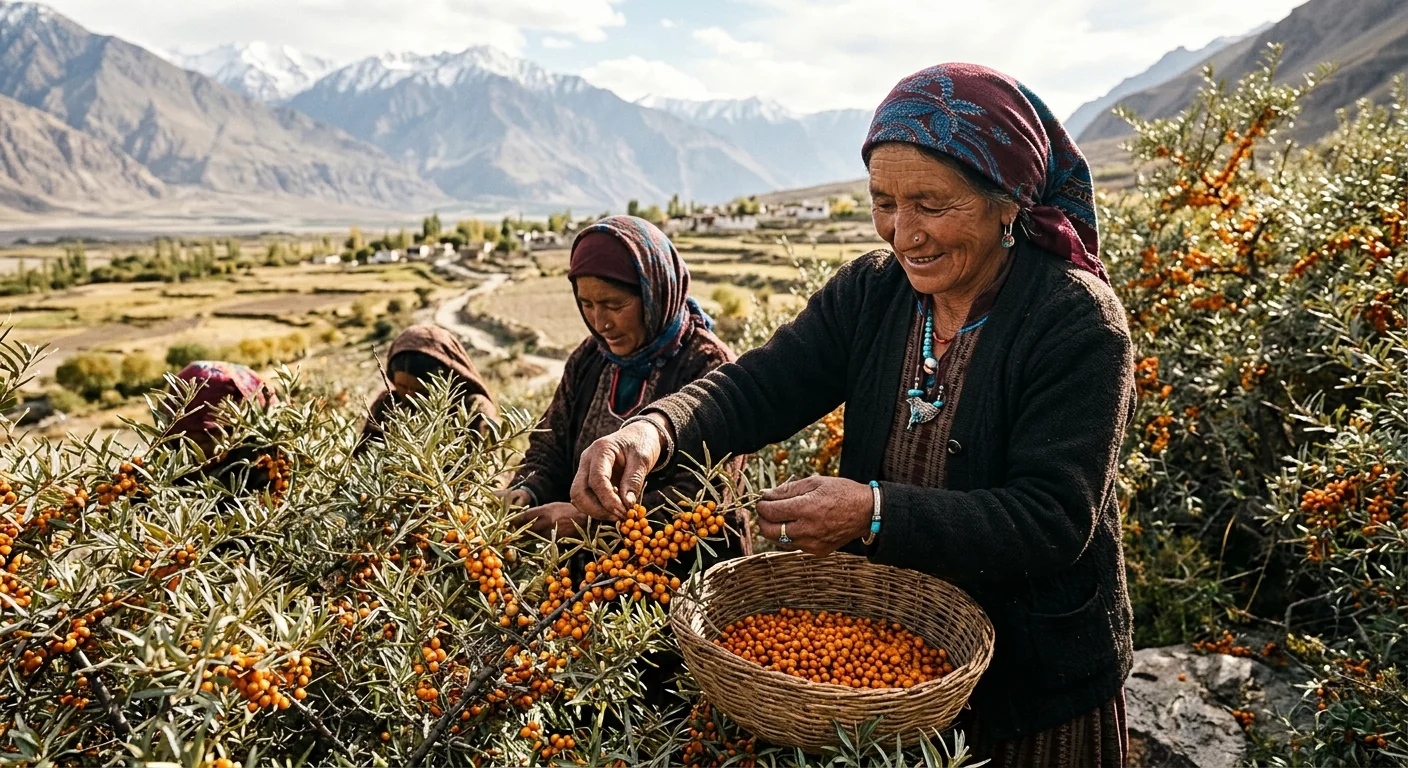
Nubra Valley, Ladakh · Autumn harvest · Real grower portraits arriving September 2026
Harvest snapshot
- Species
- Hippophae rhamnoides ssp. turkestanica
- Family
- Elaeagnaceae
- Local name
- Tsermang (Ladakhi)
- Source region
- Nubra Valley, Ladakh
- Terrain
- Trans-Himalayan cold desert
- Altitude
- 11,500 ft
- Climate range
- −43 °C to +40 °C
- Annual rainfall
- Under 100 mm
- Growing form
- Wild, thorny deciduous shrub
- Pollination
- Wind-pollinated · dioecious
- Root system
- Deep, extensive · anti-erosion
- Nitrogen fixation
- Yes, via Frankia bacteria
- Plant lifespan
- 20–25 productive years
- Harvest window
- Late August – late September
- Method
- Hand-picked, one berry at a time
Our growers
Hands that know the land.
Every bottle of Amberbio begins in the Nubra Valley of Ladakh — a cold desert that sits at 11,500 feet, where sea buckthorn survives −43 °C winters and short, intense +40 °C summers. Harvest is a six-week window each year (late August to late September), and each branch is worked by hand, one berry at a time. The bush is thorny; the work is slow. We buy directly from Ladakhi harvest families in Nubra — women and men who know the plant, the season and the terrain the way only someone born to a place can.
Ladakh's sea buckthorn belt is anchored by real public institutions we work alongside — DRDO's Field Research Laboratory in Leh, which pioneered the juice-extraction methods India uses today, and the Centre of Excellence for Sea Buckthorn at Nimoo, inaugurated by the UT administration in December 2025. Training for women's Self-Help Groups is supported by NABARD, and small-scale processing by the PM-FME scheme. In its FY 2026-27 Focus Paper, NABARD earmarked ₹1,427.84 crore of priority-sector credit for Ladakh, with sea buckthorn explicitly named among the horticulture crops targeted for productivity and area expansion. When you support Amberbio, you support one small strand of a livelihood ecosystem that keeps a Himalayan heritage plant alive.
"The berries only give themselves to careful hands. That is the way it has always been."— Local harvester, Nubra Valley
Field notes coming soon — our founder is travelling to Nubra Valley for the September 2026 harvest. Grower portraits and village-level detail will be added here after that visit.
Sources & verification
- DRDO · Defence Institute of High Altitude Research (DIHAR / Field Research Laboratory), Leh — Ministry of Defence
- Government of Ladakh · Centre of Excellence for Sea Buckthorn, Nimoo — inaugurated December 2025
- NABARD via Government of Ladakh · Priority Sector credit potential ₹1,427.84 crore for FY 2026-27, with explicit focus on sea buckthorn productivity, FPO strengthening & area expansion · 25 March 2026
Amberbio is not affiliated with, endorsed by, or sponsored by DRDO, the UT administration of Ladakh, NABARD or any government body. The institutions above are cited to describe the public Ladakh sea buckthorn ecosystem in which we operate as one small private buyer.
The journey
From wild bush
to daily ritual.
Wild growth
Sea buckthorn grows freely in remote Himalayan valleys — no pesticides, no plantations, no shortcuts.
Careful harvest
Each berry is hand-picked at peak ripeness by trained local harvesters. Respect for the plant, and for the season.
Cold-pressed pulp
Berries are pressed soon after harvest to preserve their naturally occurring nutrients and vibrant colour. Bottled with only INS 202 (potassium sorbate — an FSSAI-approved preservative) for shelf stability.
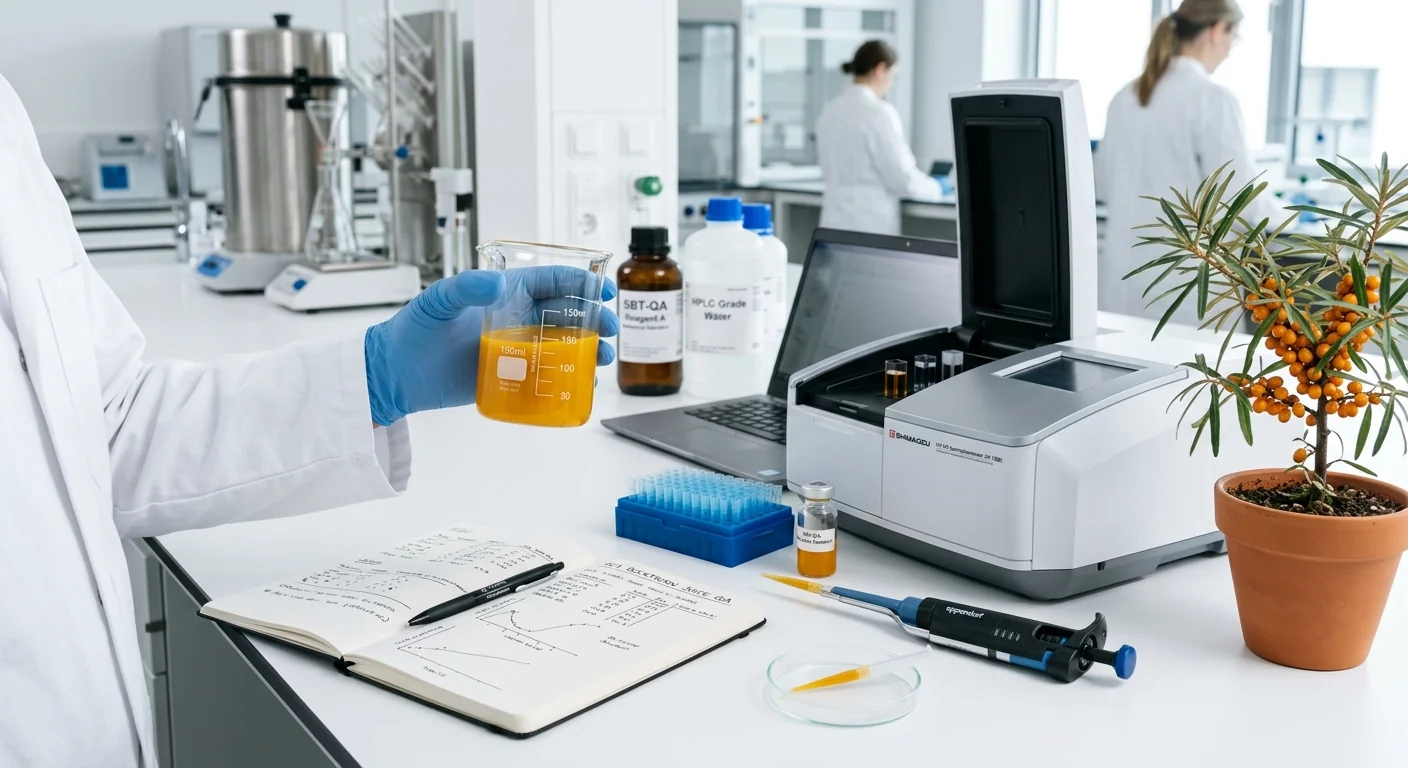
Tested for purity
Every batch is scientifically tested — because nature provides the beginning, science ensures the consistency.
Our philosophy
Nature's Gold.
Backed by Science.
Honest
Our juice contains only INS 202 (potassium sorbate) — an FSSAI-approved preservative for shelf stability. Our oils and tisane are 100% botanical, no additives. No added sugar, no artificial colours or flavours. What's on the label is what's in the bottle.
Traceable
Every bottle can be traced back to Ladakh — to a harvest window and a batch report.
Kind
Fair prices paid directly to growers. Respect for a plant, a place and the people who tend to it.
Ready when you are